Written by Vitalii Prisacari, VTCT Level 3 certified matted hair specialist and founder of Matted Hair London, with 23 verified qualifications and 1,000+ documented restorations. Reviewed September 2026.
How to Detangle Severely Matted Hair Without Cutting.
Expert Guide · London
Severely matted hair can almost always be saved without scissors. The first step is the one most guides get wrong: nothing goes on the mat, and it stays dry until a specialist has seen it. This guide shows you what helps, and what quietly makes a mat worse. Whether you call it severely tangled hair, untangling, unmatting, combing out or dematting, the method is the same, and it starts with keeping the mat dry.
Severely matted hair is detangled without cutting by slow professional work, not by conditioner or oil, and not by any product you can buy. What happens before the appointment decides how much hair there is left to save. At my London studio I've restored over 1,000 heads this way, from fine 1A to tightly coiled 4C, and across those documented cases the result is 99% saved without cutting. In my own records, going back to 2020, 89% of the people who tried to detangle a mat themselves before coming to me didn't manage it.
If your hair is matted right now, the safest thing you can do is nothing.
Keep it dry. Don't wash it, don't put conditioner, oil or detangling spray on it, and don't leave anything on it overnight. Water and product make a mat tighter and heavier rather than looser, and every hour it sits like that makes the work harder and riskier for your hair.
Braid the hair that's still loose into several small three-strand plaits. It won't undo what's already matted, but it protects the hair you haven't lost yet.
Then send me a photo. Most photos get an answer within the hour, and the consultation is free.
The short answer
Severely matted hair can almost always be detangled without cutting, but not with product. Work from the ends, on dry hair, in small sections, with fingers before any tool. Nothing goes on the mat: oils, conditioner and water swell it and tighten it. If a section moves as one piece, do not work on it at all: send a photo and have a specialist look at it.
What Causes Severely Matted Hair?
Matted hair forms when loose, shed strands fail to fall away and instead wrap around the hair still attached to the scalp. Over time these shed hairs bind together with growing hair, tightening into a dense, felted mass. Understanding why hair mats in the first place helps prevent it returning after detangling. In the 1,000+ Grade 3 to 5 cases I recorded between January 2022 and February 2026, depression, illness and hospital stays came first at 42%, around 420 heads.
The most common triggers are periods of illness or hospitalisation, where hair goes uncombed for days or weeks. Depression, grief, and reduced mobility can have the same effect. If depression is the reason the brushing stopped, the matted hair and depression guide is written for exactly that. Other causes include very dry or porous hair that catches on itself, infrequent washing of long or textured hair, and wearing protective styles or extensions for too long without proper takedown.
Afro and curly hair types are more prone to matting because the natural coil shape allows shed hairs to lock in place easily. This is not a sign of neglect or poor hygiene. It is simply how certain hair behaves, and it is always treatable.
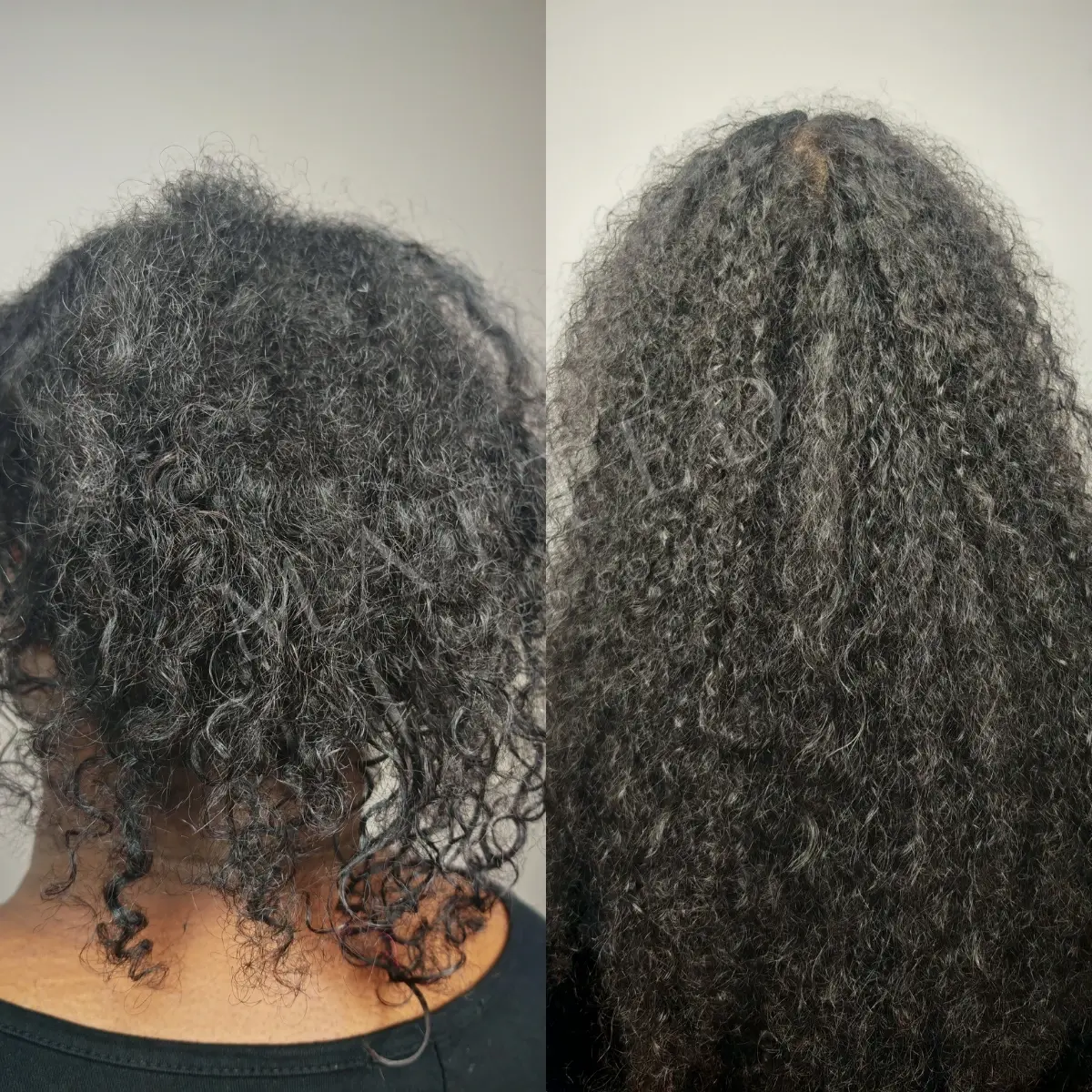
Tangled or Matted? A Ten-Second Test
There's a test you can do at home in ten seconds. Take a section of dry hair and try to separate it with your fingers, without pulling. If the strands move apart, even slowly, it's tangled. If they've knitted into a pad that shifts as one piece, it's matted. The difference changes everything, because tangled hair responds to the usual advice and matted hair doesn't. On the five-grade scale I work to, hair that still separates with fingers is Grade 1 and a comb still passes through Grade 2; once neither works, the section is Grade 3 or beyond. The full definition and all five grades are on the page what is matted hair.
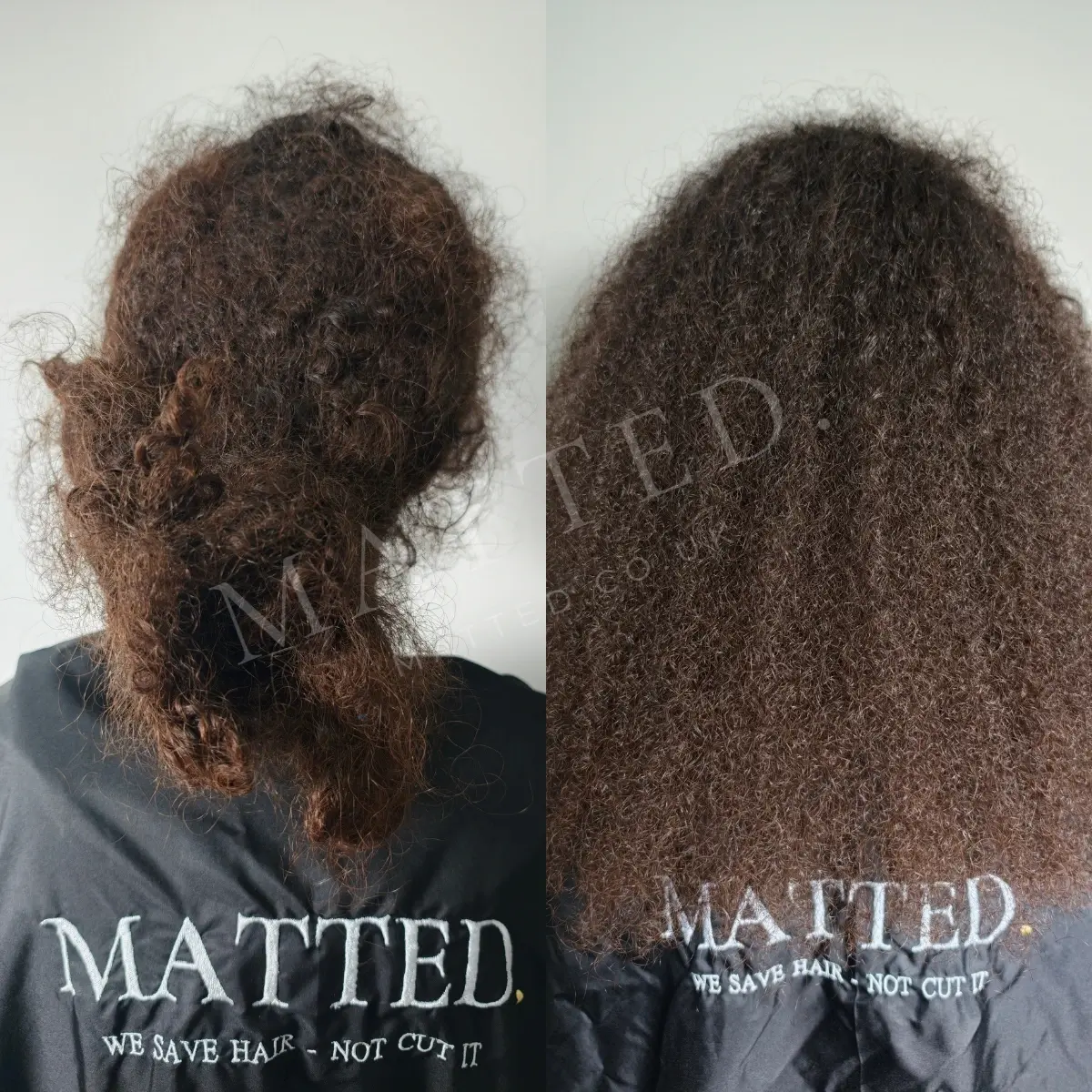
If yours is tangled, work through it gently with your fingers, from the ends upward, a little at a time, and stop the moment anything hurts. If it's matted, everything below is for you. If the pad you found sits at the back of your neck, that spot has its own causes and its own fix: matting at the nape of the neck.
| What your fingers find | What it is | Safe at home? | What to do now |
|---|---|---|---|
| They pass through, with a little resistance | Tangled, Grade 1 | Yes | Work dry, from the ends up, fingers before any comb. |
| A comb catches, but the strands still separate | Knotted, Grade 2 | Yes, with care | Sections two fingers wide, held above the knot so nothing pulls at the scalp. |
| They stick, and the section will not open | Matted, Grade 3 | No | Stop. Keep it dry, put nothing on it, send a photo for an assessment. |
| The section moves as one pad, or sits flat against the scalp | Matted, Grade 4 to 5 | No | Nothing on it, no water, no cutting. This is 6 to 14+ hours of professional work. |
Severely Tangled Hair That Is Not Yet Matted
Most people who search for extremely or badly tangled hair are in this middle ground: the hair is far past an ordinary knot, but the strands still move if you are patient. Work on it dry, in sections about the width of two fingers, holding the hair above the tangle so nothing pulls at the scalp. Start at the very ends and open a centimetre at a time, fingers first, and bring in a wide-tooth comb only once your fingers pass freely. If a section stops moving and shifts as one piece, stop working it. That section has crossed into matted, and the rest of this guide is written for it.
Why No Product Opens a Mat
I meet every product below in the studio, already in somebody's hair, and by the time it reaches me it has usually done the opposite of what the label promised. The slip products I use myself earn their place late in the work, in trained hands. On a mat at home, this is what each one does.
Coconut oil
Coconut oil is solid below about 24°C. Poured on warm it feels like slip, then it cools inside the mat and sets hard. What you're left with is the original mat plus a wax that has to come out before anyone can start on the hair itself.
Olive oil
Olive oil behaves the opposite way, which is why it fools people. It's genuinely slippery for the first hour or two, and in that window it feels like it's working. Then it oxidises and thickens, and instead of letting strands slide past each other it sticks them together. By then you aren't dealing with the mat any more. You're dealing with the mat and everything now holding it shut.
Can You Detangle Matted Hair With Conditioner?
Conditioner cannot detangle severely matted hair, and neither can a mask. Conditioner is water based, and that's the problem. It adds weight and moisture to a mat without adding separation, so the section swells and knits tighter. Conditioner works on tangles. It doesn't work on mats, and the two aren't the same thing.
If you have already used it, you have not ruined anything, and this is the part most people need. Stop adding more, and do not go back under the shower to rinse it out, because that is more water into the same mat. Let the hair dry completely, with warm air rather than cool, before anyone touches it again. A dry mat is the easiest version of the job, and every hour it stays wet it gets heavier and tighter.
Cowboy Magic Detangler
Cowboy Magic Detangler comes up often, and I don't recommend it on matted hair. Slip products only help where strands can still move past one another. In a felted mat they can't, so the product sits on the surface, adds weight, and leaves you with a wet mat instead of a dry one.
Overnight and long soaks
Nothing goes on overnight, and nothing is left sitting for hours, unless a specialist has seen your case and told you otherwise. Long soaking doesn't loosen a mat. It saturates it. A wet mat is heavier and tighter than a dry one, and you've given away the easiest version of the job.
Everything else
People arrive having tried whatever they found in a hurry: sprays, leave-in creams, kitchen oils. None of it was chosen for their hair, because nobody had looked at their hair. Every head behaves differently once it's matted, and a product that saved one person's hair can set another's solid. Attachments are a special case: matted extensions need bond-by-bond work.
Once the hair is detangled, the rules change completely. This is when a mask, a bond treatment or a light oil earns its place, and it's when I'll tell you which one suits your hair rather than someone else's. Most clients do well washing two or three times a week from that point, using what I've recommended for their hair. That's the order that works: detangle, then treat.
Combing Out Matted Hair: When and How
Combing out matted hair only works while the hair is still tangled, not once it has felted. The test is the same ten-second one above: if a wide-tooth comb passes from the ends with light pressure, comb; if it stops and the section moves as one piece, put the comb down. On a tangle, work dry, from the ends upward, two or three centimetres at a time, holding the section above your fingers so nothing pulls at the scalp. Fingers first, comb second, never a brush.
On a mat, a comb does one of two things: it tears the strands that are still attached, or it drives the shed hair deeper into the knot. Across my records, 89% of home attempts on severe mats made the professional work longer. So the rule is short: comb a tangle, never a mat, and stop the moment anything hurts.
When Nothing Has Worked
If conditioner, oil, a detangling spray and an evening of patience have all failed, the hair is matted, not tangled, and nothing you add now will change that. That is not a failure on your part: a felted mat is shed hair locked around growing hair, and no product can unlock it.
What helps from this point is to stop. Stop adding product, stop wetting the hair, stop pulling. Dry the section with warm air if it is damp, braid the loose hair around it so it cannot be drawn in, and leave the mat exactly as it is. Then send me a photo. Most photos get an answer within the hour, the assessment is free, and the answer is almost always the same: it can be saved. Across 1,000+ documented cases, 99% came out without cutting, including heads that had been told by another salon that cutting was the only option.
When to See a Professional
A felted mat is specialist territory, and not because the method is a secret. The work is slow and it needs experience reading how the hair behaves. The price of a wrong move is hair you don't get back. Grade 3 takes six to nine hours in my chair, Grade 4 ten to fourteen, and Grade 5 sometimes runs into a second session.
If you're working through what you thought was a tangle and it isn't giving, stop. Stop sooner if anything hurts. Matting that sits tight against the scalp, covers a large area or has been there for weeks belongs with a professional detangler from the start. If you are doing this for someone else, the carer's guide to matted hair in later life covers the routine that stops it returning.
A trained natural hair specialist in London can save hair that looks beyond rescue, and reaching out early usually means you keep more of it. There's no judgement in asking. What feels impossible at home is often routine for someone who does this work every day. If you are dealing with a long-standing or full-head mat, my professional detangling service covers what to expect from restoration. For tightly coiled hair, my guide to matted afro and 4C hair applies the same rules to the texture that needs them most. My complete guide to matted hair covers the whole subject in one place.
What to Do at Home, Step by Step
Five steps, and none of them touches the mat itself. Each one protects the hair while you arrange for it to be seen.
01
Stop the water
Water is not your friend while hair is matted. It swells the cuticle and pulls every knot tighter, so a section that could still be worked dry becomes denser and heavier once it's wet. Detangle first, wash after.
02
Braid what's still loose
Braid the hair that isn't matted yet. Use several small three-strand plaits rather than one thick braid, so as much hair as possible stays separated from the matted section. Keep them comfortable, not tight. This is the one thing you can do that genuinely helps, and it works because it stops loose hair being drawn into the mat while you wait.
03
If the hair gets wet anyway
If the hair gets wet by accident, in the rain or from sweat, don't rub it with a towel and don't put a brush or a comb near it. Rubbing is what drags loose hair into the mat and makes it bigger. Dry it with warm air rather than cool, because the only thing that matters now is getting it dry quickly.
04
Leave the scissors alone
Cutting feels like the quick fix, and it's the one move you can't take back. Keep scissors out of reach, the way I do in the studio, and let someone who saves hair for a living tell you what is possible first.
05
Send a photo
Send me a photo of the hair as it is now. Most photos get an answer within the hour. I'll tell you honestly what I'm looking at and what it would take, and the consultation is free in every case, whatever the photo turns out to show.
Can Severely Matted Hair Be Saved Without Cutting?
Yes. Severely matted hair can be saved without cutting in 99% of the 1,000+ cases I have documented, as long as the hair shaft itself is intact. What decides it is not how bad the mat looks but whether the strands are still whole: a mat that has been there for months, one that sits flat against the scalp, or one that has been soaked and dried many times still opens, it simply takes longer. Grade 3 takes six to nine hours in my chair, Grade 4 ten to fourteen, and Grade 5 sometimes runs into a second session.
The 1% that cannot be saved are cases where the hair was already cut, chemically broken or pulled out before it reached me. If you have been told that cutting is the only option, ask for a second opinion first: 73% of my clients had heard exactly that before they found me.
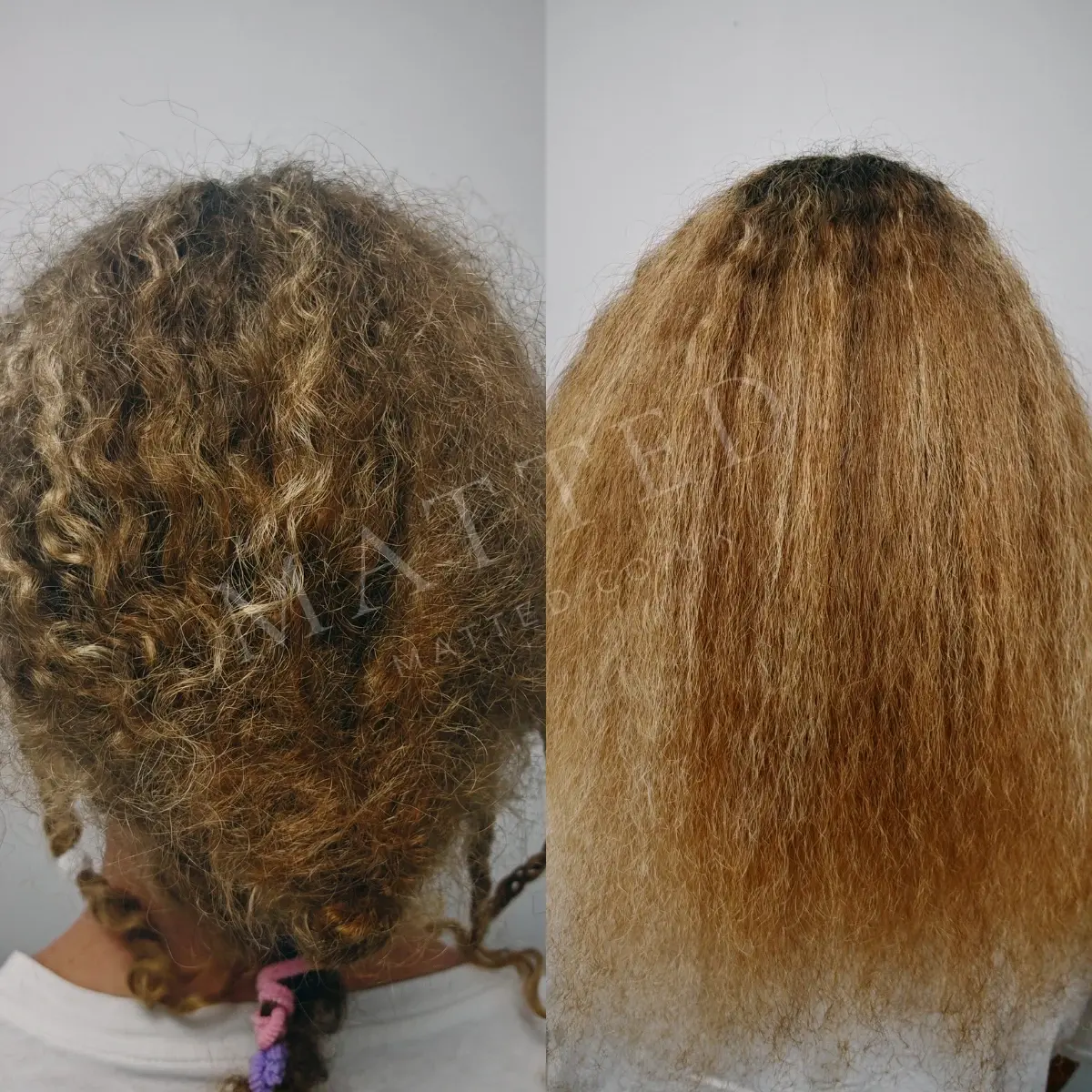
How Matted Hair London's Detangling Service Works
My dematting service is built entirely around saving hair without cutting. Every appointment begins with a free 10-minute consultation by phone, WhatsApp, or video call, so you get an honest assessment and a clear estimate before you spend a penny.
During the session, each mat is treated individually with professional-grade slip products matched to your specific hair type and condition. I work in studio in Catford, or travel to your home, hospital, or care facility anywhere in London. Every restoration is private, calm, and free of judgement. Whether your hair is fine and straight or tightly coiled and afro-textured, the goal is the same: full knot removal with your length intact.
Frequently Asked Questions
Can severely matted hair be detangled without cutting?
Yes. In the vast majority of cases, severely matted hair can be fully detangled without cutting, provided the hair shaft is intact. Across 1,000+ documented cases, the result is 99% saved without cutting.
How long does it take to detangle severely matted hair?
It depends on the severity. A small mat may take under an hour, while a full head of severely matted hair can take 14 hours or more of patient professional work, often across more than one session. On my five-grade scale that is six to nine hours at Grade 3, ten to fourteen at Grade 4, and fourteen or more at Grade 5.
What is the best product for detangling matted hair?
None at home. A product can't open a felted mat, and most make one worse by adding weight and moisture. Keep the hair dry and put nothing on it until someone has looked at it. After detangling I'll tell you what suits your hair. That's the point where products help. The professional slip products belong to the studio work, and they go on under my hands rather than yours.
How do you fix matted hair without cutting it?
By slow, dry, strand-by-strand separation: from the ends upward, in small sections, with fingers before any tool, and with nothing applied to the mat first. That is the method behind the 1,000+ documented cases restored here, 99% of them without cutting. Product comes after, never before.
Does detangling matted hair hurt?
It should not hurt when it's done properly. In the studio I work from the ends upward, in small sections, with the hair supported at every moment so nothing ever pulls against the scalp. Pain at home is a signal to stop, not to push through.
Can afro and 4C hair be detangled when matted?
Yes. Afro, curly and 4C hair can be saved when matted, and the method is matched to the texture rather than forced onto it. The rule while you wait is the same: keep the hair dry and put nothing on it. Afro and 4C hair is a texture I specialise in, and it comes out without cutting in the same 99% of cases as everything else I document.
When should I see a professional detangler in London?
See a professional detangler when the matting sits close to the scalp, covers a large area, or has been present for weeks. A specialist can save hair that looks beyond rescue, and the earlier the photo arrives, the more length stays. By the fourth week a mat holds 2,800 or more shed strands, and each week after that adds hours to the work.
Can you detangle matted hair with conditioner?
No. Conditioner is water based, so on a felted mat it adds weight and moisture without adding separation, and the section knits tighter. It works on tangles, which are a different thing. If you have already applied it, stop, don't rinse it out under the shower, and let the hair dry fully with warm air before anyone works on it. A dry mat is the easiest one to open.
Book a Professional Detangling Session in London
If your hair feels beyond saving, it almost certainly is not. Start with a free, no-pressure assessment and find out exactly what is possible.
Book Your Free Assessment